
Home › Forum › Ask A Member › Evinrude 4266 › Re: Evinrude 4266

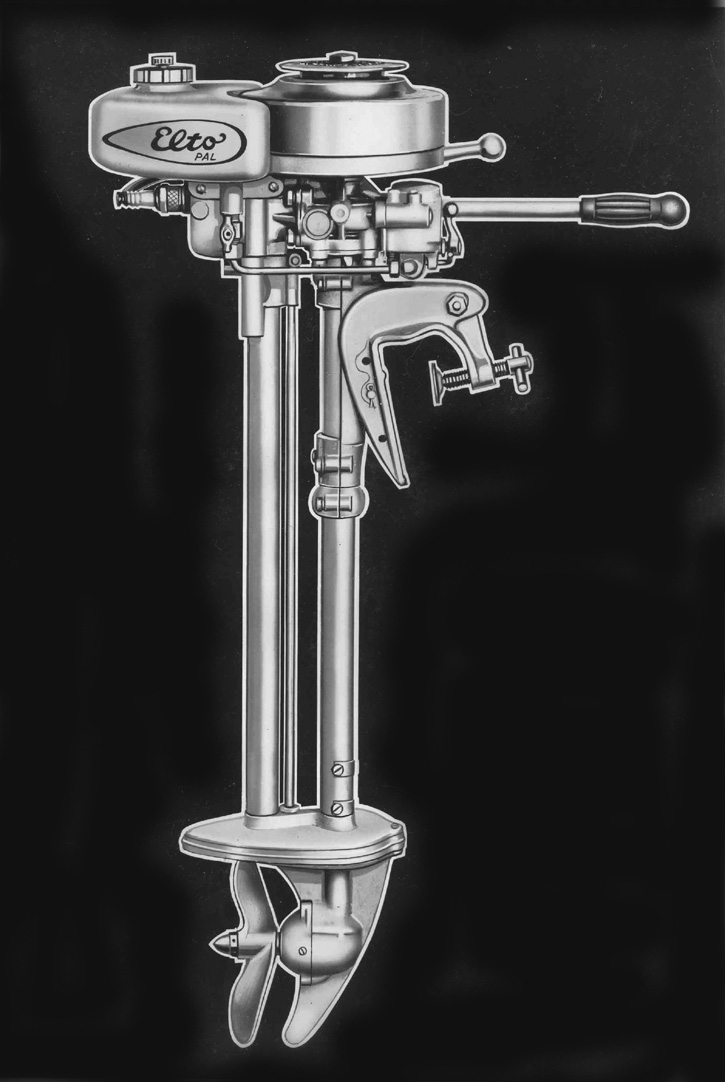
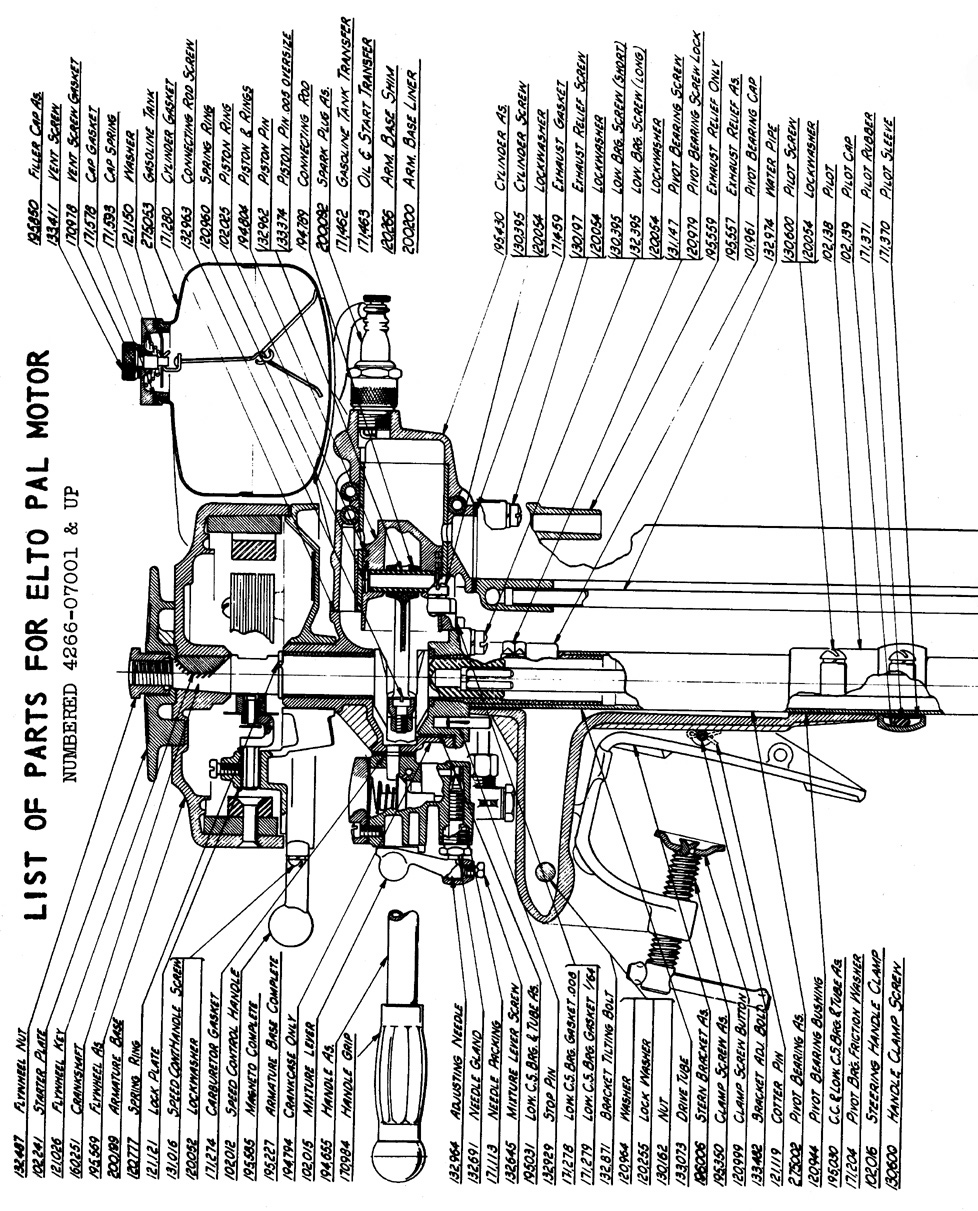
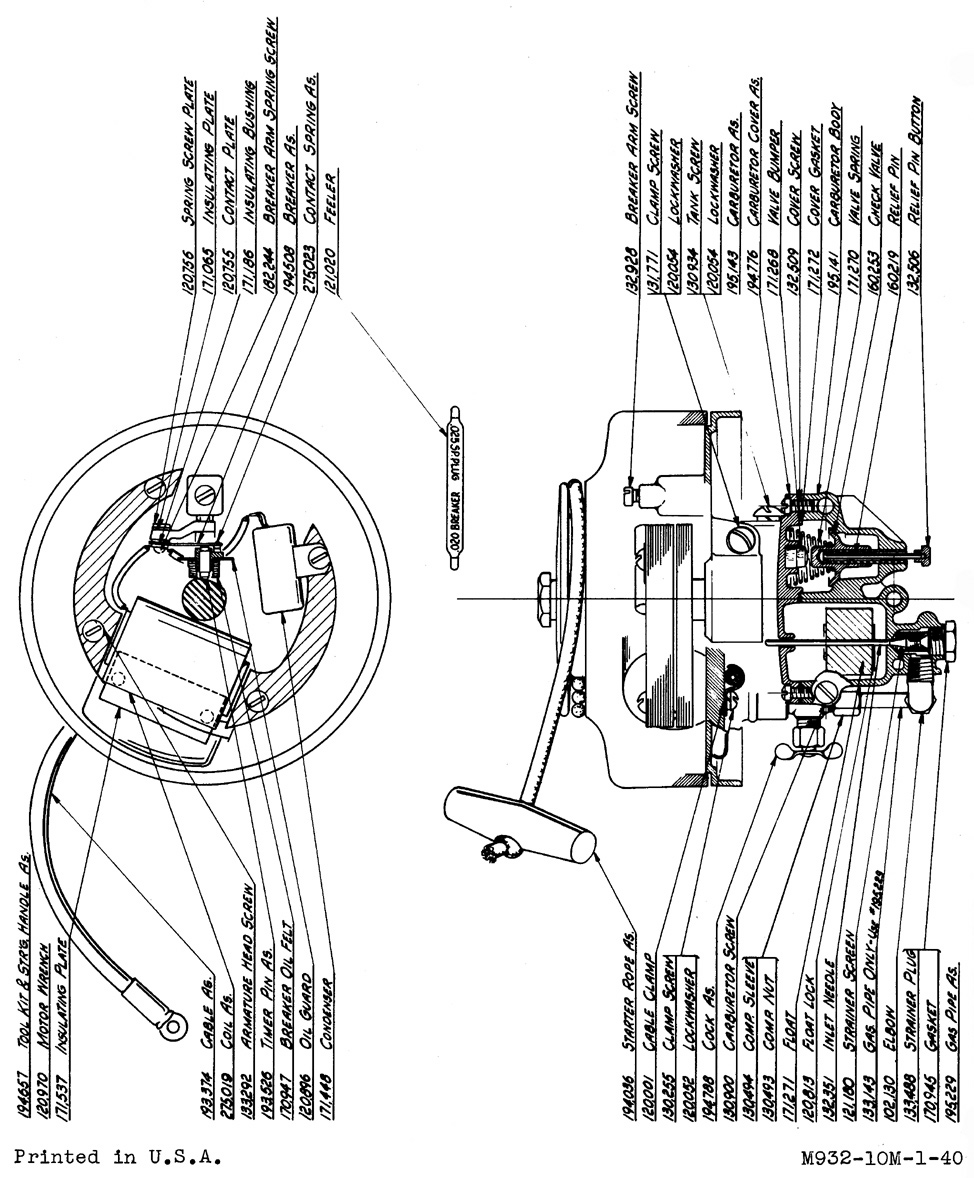
Your Elto Pal was built in 1941. With a bore and stroke of 1-⅜", it has a piston displacement of 2.04 cubic inches. The Pal develops 1.1 break horse power at 3,500 RPM. It weighs 14 pounds and sold for $37,50 FOB Milwaukee Wisconsin in 1941. The flywheel magneto uses soft Iron magnets and may loose magnetism if dropped without a piece of iron (A keeper) to make continuity across the poles. When on the motor, the coils laminated core serves this purpose. ALWAYS check the magnets to be sure no loose parts are stuck to the magnets before you put the flywheel back on. The flywheel nut should be torqued to 25 foot pounds. Most ignition problems are caused by poor contact in the breaker points.The rotating magnet can generate 5 or 6 volts in the primary which is steeped up by the coil to as much an 20 to 25 thousand volts at the spark plug. In actual use the voltage will only be what is necessary to jump the gape. Thirty thousand volts will jump an air gap of over a quarter inch. So seeing it jump the .030" Spark plug gap means you are only looking at 2,500 volts. You can generate that much with a 1-½ volt flashlight battery.
In fact that makes a good coil test. With a piece of paper between the points and the shell of the spark plug wired to the block, hold a battery against the breaker post there the coil & capacitor are attached. At the same time hold a screw across the top of the battery. Then a flexible wire clipped to the block and scraped along the screw threads will make a pulsing current in the coil and showing as a spark across the spark plug gap. Other problems – Dirty insolation in the points, bad insolation in the wires. Damaged insolation in tho coil from cranking the engine with the plug wire disconnected. (Thus producing full voltage with nowhere to go) Low magnetism in the magnets by a previous mechanic dropping the flywheel without a keeper on the magnets. Primary resistance should be very sow – Secondary resistance in the thousands …
The popit valve has only one adjustment – runs at about half a turn. There is a fine mesh screen filler in the base of the carburetor. The float is sealed with lacquer, which of course is dissolved in alchol. After cleaning it may be sealed against todays fuels with fuel proof model airplane dope OR Super Glue. Check valve lift should be 3/32", valve spring pressure should be 3 ounces, fuel level in the float bowl should be 23/32" down from the rim.
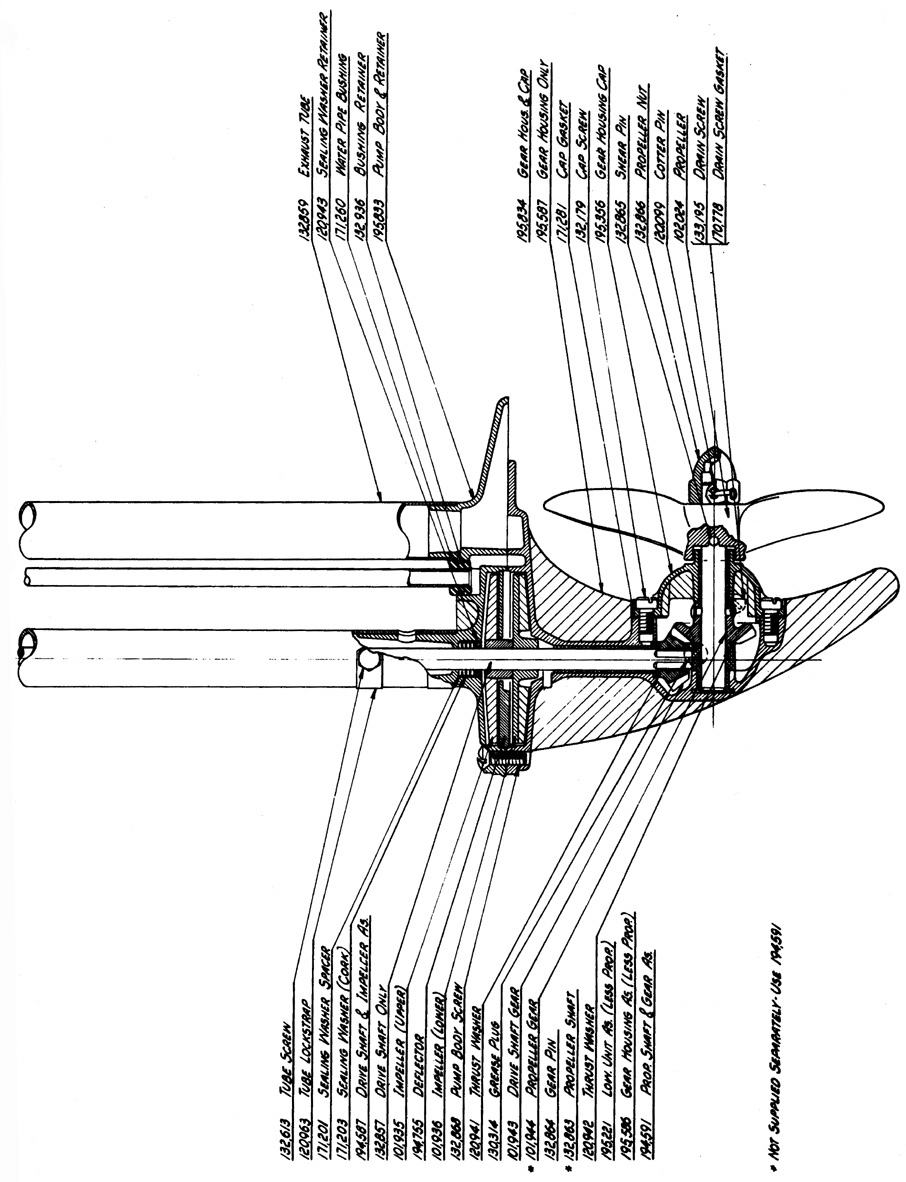
There are no seals in the gear case so it takes grease. John Deare Corn Head Grease works well, but should be changed regularly as it absorbs water. The Pal is equipped with an aluminum veined two stage centripatal water pump. There should be no metal to metal contact. It must be submerged in order to pump. The water outlet next to the exhaust pipe is also an exhaust relief port to make starting easier. It is partially restricted when the water starts circulating. The water jacket is a couple turns of copper tubing wrapped around the iron cylinder sleave before it goes into the die casting machine. That keeps down rust and corrosion. It was built for light weight and does not like rough handling. I see many with the keg broken off the gear case. . . . 😉