
Home › Forum › Ask A Member › QD16 Restoration › Reply To: QD16 Restoration

Not sure which article you were reading but I saved a few discussions on the subject by Frank R., Mumbles, and maybe Fleetwin. One of these might cover it:
These are great engines, yours has the larger 15/18hp gearcase which is a good thing…
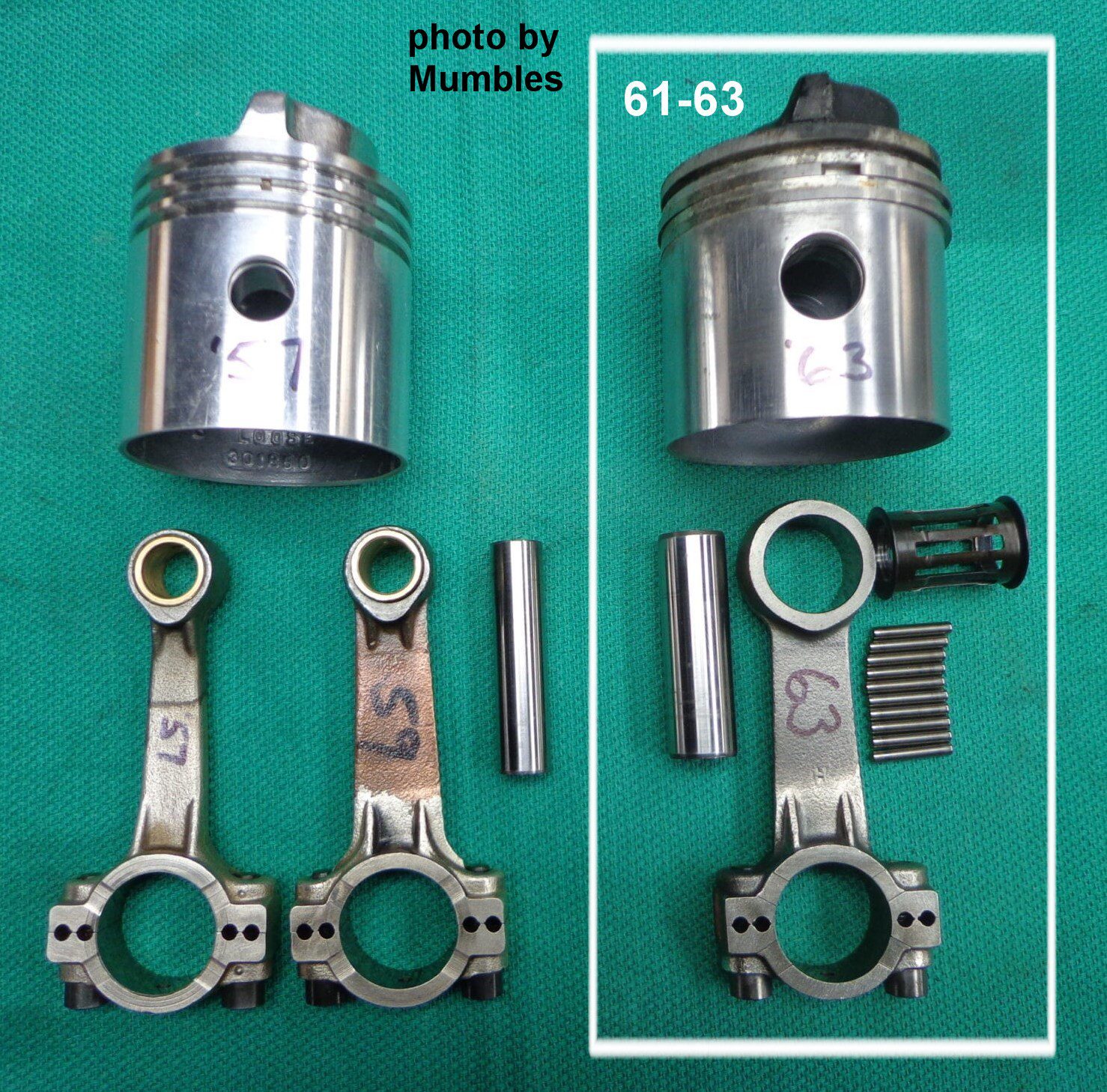
The weak link on these engines are the wrist pins. The older 10 HP had smaller wrist pins with plain bushings, which were prone to wear…An audible “ticking” at idle speeds usually indicates sloppy wrist pins. Mixing your fuel/oil at 16:1 will help prolong wrist pin life. Later model 10 HP used pistons/rods with larger diameter wrist pins along with needle bearings, these parts will fit in the older models like yours if wrist pin slop is/becomes an issue…
THE 61 / 62 / 63 MODELS HAD THE IMPROVED RODS , WRIST PIN AND BEARINGS.—–SAME WRIST PIN BEARING AS USED ON THE 125 hp V-4 SO ADEQUATE FOR THE 10 HP
================================================
The bushing in the connecting rod was only part of the problem. A bigger problem was the pin would beat loose in the piston. There just wasn’t enough support for it.
Yes, they fixed it in 1961 with roller bearings in the rod and much larger wrist pins. In fact it was the same bearing and pin diameter as used in the big motors.
To update them requires changing the pistons, rods, wrist pins, and snap rings, and adding the roller bearing. The bearings at the big end of the rods can be reused.
Like all 10 HP before 1961, they would beat the wrist pins loose in the pistons. ’61-up parts will fix it, but you have to replace pistons, connecting rods, wrist pins, and bearings.
But nothing wrong with the way they were, if they aren’t worn out yet. It’s amazing how loose they can get before self-destructing.
================================================
Depends on how badly the wrist pins are beaten loose in the rods & pistons. A big problem that was corrected in 1961-up. You can retro-fit the new design into older motors but you have to replace the whole thing—pistons, wrist pins, wrist pin bearings, connecting rods, wrist pin snap rings. You don’t have to change the bearings at the big end of the rods.
With the piston in your hand, with connecting rod still in place, can you just move them around to check for excessive play? Check for snug and smoothness of movement, kind of like checking a caged bearing?
Yeah, worn wrist pins are pretty obvious when rocking the rods up and down into the piston by hand…
The rods will be sloppy on the wrist pins, and the wrist pins might be sloppy in the piston bores as well.
Is this a motor that is really special to you? Do you plan to keep it? If so, I would probably make the upgrade to the newer pistons/rods/wrist pins/wrist pin bearings…