

Home › Forum › Ask A Member › Gas / fuel leak help on a 1954 25hp Johnson RD-15 › Reply To: Gas / fuel leak help on a 1954 25hp Johnson RD-15

Crosbyman, thank you for your response. I believe my current system is working, and I’m happy to leave it as is.
I did forget to mention that I capped the 4psi air supply on the intake manifold with a vacuum cap from O’reilly Auto parts and a hose clamp, as suggested in the book, “Cheap Outboards: The Beginner’s Guide to Making an Old Motor Run Forever”. This seems to be working fine.
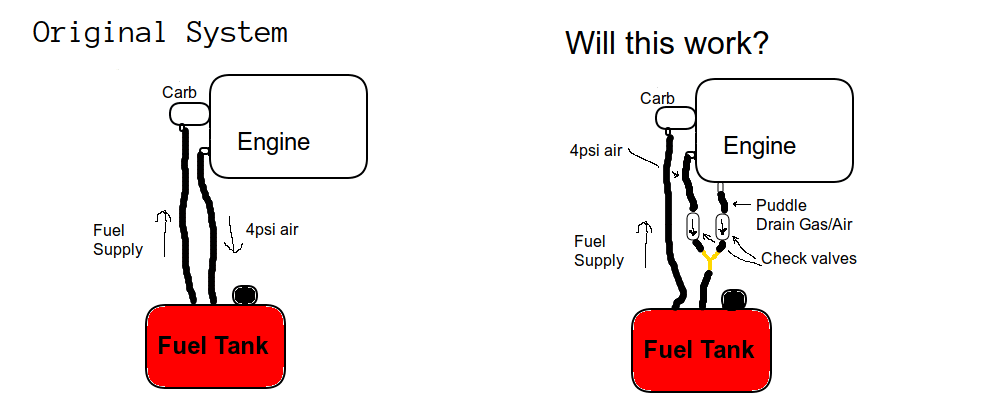
That being said, I had an interesting idea this morning that I would like feedback on. What if, instead of adding a fuel pump to the system and worrying about venting the fuel tank, what if the excess fuel was simply added to the return air line. Something like this:
You can get small, fuel rated check valves on Amazon line these:
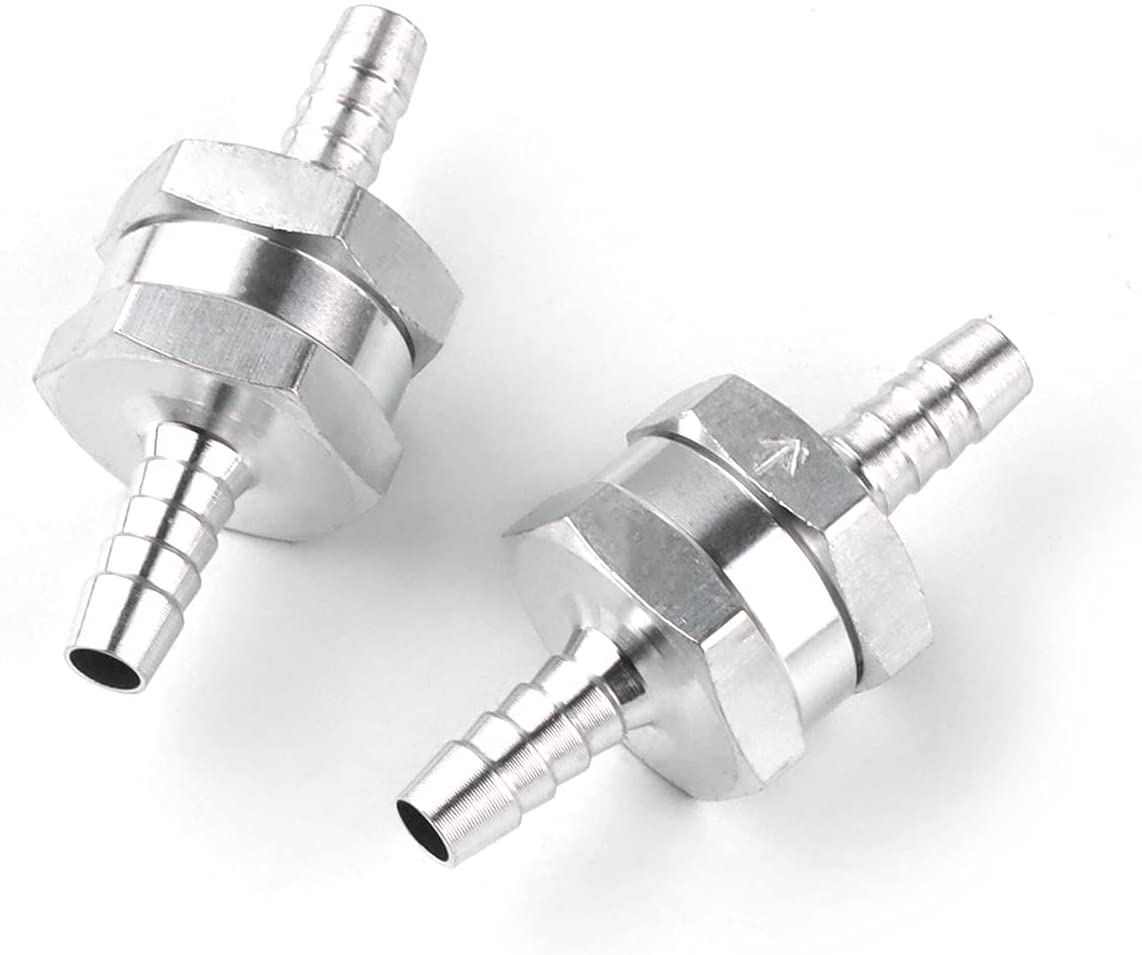
The 4psi air from the engine would be run through a check valve to stop any gas from going back into the air supply, and the puddle drain would also be run through a check valve to stop the 4psi air from stopping the gas from escaping the crankcase. These two check valves would then be joined in a “Y” fitting, that would dump into the air return on the pressurized tank.
There are check valves up stream on both the 4psi air, and the puddle drain, and I believe they are both roughly at the same pressure from the crankcase. I assume here, that they exact pressures of those systems would be the key to making this drain system work, or being a complete failure. The pressure of the puddle drain gas/air mix would have to be greater than the pressure of the 4psi air from the front of the intake manifold, or the 4psi air would close the check valve draining the crank case causing the crank case to fill up with gas/oil mix and not drain. There is a good chance that this would simply not work. I say 4psi, but the manual actually states that the tank pressure system is 4-7psi. If I understand the system correctly, there are two check valves from each cylinder that are used to pressurize a constant flow of air from the engine. Perhaps in order to make such a pressurized tank gas return system work, the 4-7psi line would have to have a much smaller diameter hose installed in order to drop the pressure adequately to ensure the puddle drain check valve could open. The tank itself already has an over-pressue valve on it, such that if too much pressure was built-up from the two air sources, it would be released.
I like that this idea would keep the engine as stock as possible, without a fuel pump, allowing for this engine to continue to be unique and use the original pressurized tank as designed, but would also allow the excess fuel to be recycled into the tank.
As interesting as this all is, my new fuel pump is working great, and I’m tempted not to touch the system since like you said, if it isn’t broken, don’t fix it!
Crosbyman, I don’t think I am necessarily “qualified” or experienced enough to write an article for a magazine on this topic. Outboards are relatively new to me, but I would be fine co-writing an article if you would simply be willing to look over what I write via email, and make sure what I’m saying is correct, and put your name on it as well.
Thanks, and I welcome all comments and feedback on my proposal. Thanks!