
Home › Forum › Ask A Member › 1973 9.5 Hp Evinrude › Reply To: 1973 9.5 Hp Evinrude

Those little 9.5hp outboards do run well if they do not have exhaust leak issues. These motors can not be compared to the 1950’s to 1963 10hp motors or the 1974 and later 9.9hp motors. These motors were made from 1964 to 1973. They were an attempt at marketing a low profile fishing motor for the average fisherman. Cast in all directions without any interference from the motor was advertised….lol
These are not high compression motors. Not uncommon to find compression numbers from 60 to 80. Low 50’s is not that uncommon either. The starter is a low impact starter that allows for easy starting. Because it is a low impact starter, you don’t spend the motor over high enough to get higher compression numbers. Take a simple starter rope and wrap it around the flywheels own rope sheave. Pull hard about 4 to 5 times and you will notice you will have higher compression number usually between 60 to 80. Again for compression check do not use the low impact starter setup. Please use the rope starter method. Do not use the drill to spend the power head to check compression. Gives false higher compression assessment values. Using the rope start method gives you an assessment of a non starting motor’s compression values and compare it to known values as stated above.
These motor will typically get 8 to 12 mph on a loaded 14 ft aluminum boat. They run real smooth (if they do not have exhaust leak issues) and can low troll all day long.
An exhaust leak issue can be identified by removing the motor hood. With an exhaust leaking issue the motor will run sluggish and rough with the hood on. It is being smoothed with its own exhaust fumes. By removing the hood while running on the boat, the performance will significantly improve. It is now getting fresh air for combustion.
Since it normally sits low on the boat, it will also sit low in/on the test barrel. It tends to run poorly in the barrel, because it inhaling its own fumes. Placing a fan near by (safely), you can blow the exhaust fumes away. It is much preferred to run, test, and set the low idle speed needle on the boat.
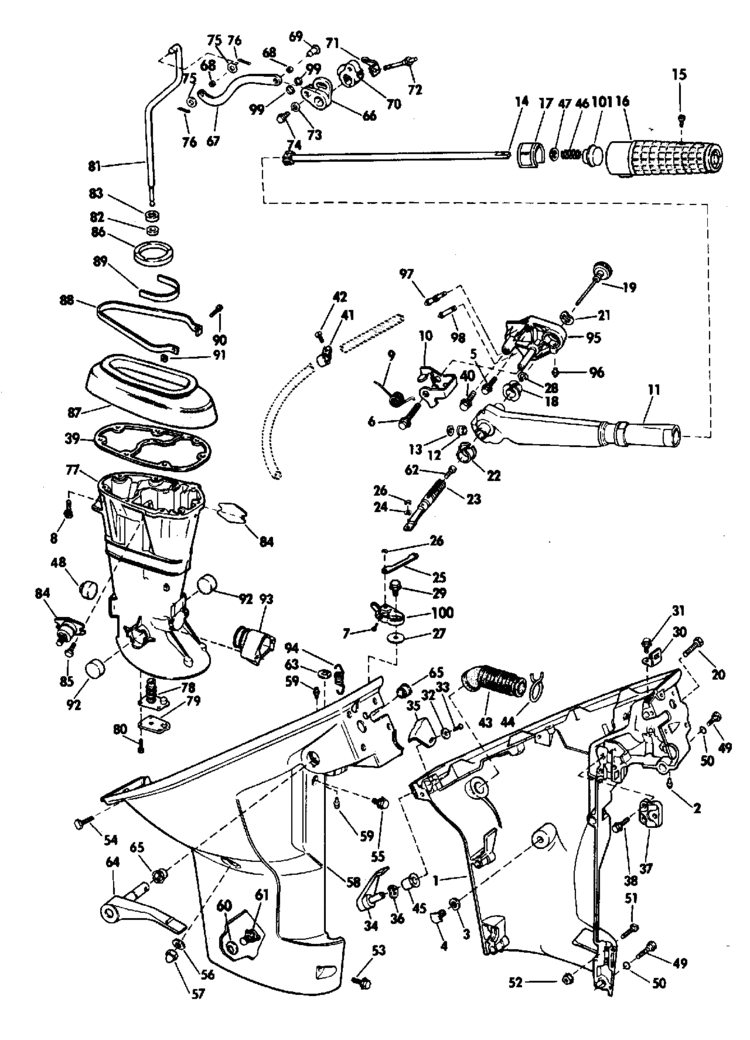
There are four areas of exhaust leaks. Parts diagram for the exhaust housing.
1.) torn or missing shift rod rubber boot (part number 78)
2.) torn or deformed exhaust housing seal (part number 87)
3.) exhaust hose is cracked or torn (part number 43)
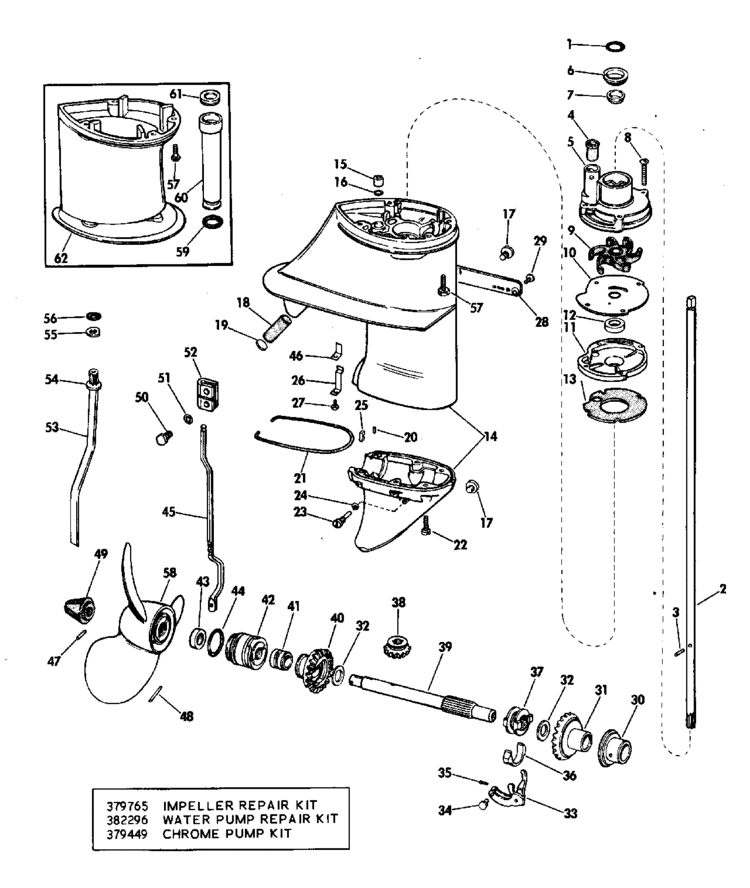
Under gear case parts diagram
4.) Impeller housing seal (motor part number 6)
If you have the extended shaft model then the Exhaust housing to impeller spacer seal (part number 61)
The 4 listed item help prevent exhaust fumes from entering the power head chambers from the exhaust housing below. Leaking from one of the those 4 exhaust items can cause exhaust fumes to enter the power head chambers. Thus causing the motor to inhale its own fumes with the hood on.
http://www.marineengine.com/parts/evinrude-johnson-parts-diagrams/EVINRUDE/40171.gif
http://www.marineengine.com/parts/evinrude-johnson-parts-diagrams/EVINRUDE/40174.gif