

Home › Forum › Ask A Member › Weak spark on 1973 20 Hp Johnson › Reply To: Weak spark on 1973 20 Hp Johnson

All I know of this system is what you, fleetwin, and some others have so nicely and thoroughly explained. So I’m learning as I go. I see what Phil says about the flywheel on these having 2 magnets. I looked at the flywheel from my 1973 Evinrude 25 HP that came with the low tension magneto and noticed that. I’m not trying to confuse the issue or say it should be run like this, but just wondering if that setup with the 2 driver coils would work with the earlier flywheel with just one magnet? Maybe that’s how the seller used it?
Not saying that this addresses the weak spark issue, just throwing a couple thoughts out there.
Also, as a side question, why did OMC go to this system in the first place? Was it just an attempt to move the coils out from under the flywheel so they could be replaced easier?
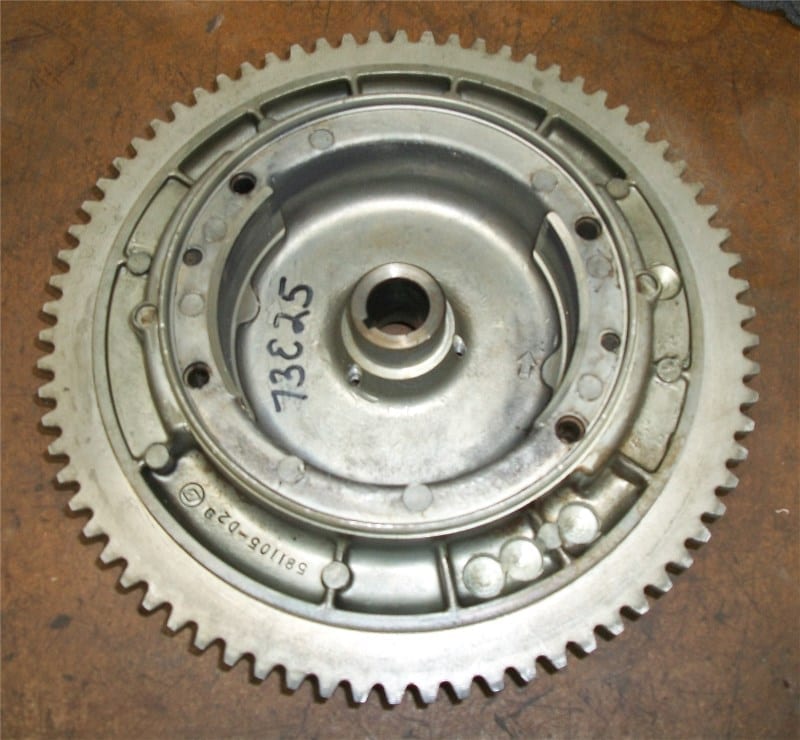

Well Steve, anything is possible. I guess we will see what happens when he tries out this crazy set up. Your flywheel theory might be the answer, unfortunately E-25 doesn’t have one of each style flywheel to try.
This system was the intermediate stop between regular magneto ignition and CDII, which was introduced in 1977. One of the reasons this system was introduced was to make room for alternator windings under the flywheel…Deleting one of the coils under the flywheel made room for the alternator windings. The low tension mag plates on the 9.9-15, 35, and 40hp models had bosses to accomodate an alternator winding. The 22CI engines used the regular universal mag plate, so the alternator windings would not bolt up on these engines. Don’t know why OMC didn’t leave the universal mag set up in place on the 22CI engines until 1977 though.